Welcome to our website. Neque porro quisquam est qui dolorem ipsum dolor.

Lorem ipsum eu usu assum liberavisse, ut munere praesent complectitur mea. Sit an option maiorum principes. Ne per probo magna idque, est veniam exerci appareat no. Sit at amet propriae intellegebat, natum iusto forensibus duo ut. Pro hinc aperiri fabulas ut, probo tractatos euripidis an vis, ignota oblique.

Ad ius munere soluta deterruisset, quot veri id vim, te vel bonorum ornatus persequeris. Maecenas ornare tortor. Donec sed tellus eget sapien fringilla nonummy. Mauris a ante. Suspendisse quam sem, consequat at, commodo vitae, feugiat in, nunc. Morbi imperdiet augue quis tellus.

Thursday, April 5, 2012

HCL Launches Two New Android 4.0 Tablets in India

HCL just launched two new Android slates in India, the HCL ME U1 device and the HCL MyEdu Tab, both packing Android 4.0 ICS. These models have competitive pricing and the HCL ME U1 comes with a 7 inch capacitive touchscreen display, with a resolution of 800 x 480 pixels.

The specs also include a 1 GHz processor, 512MB of RAM (DDR3), 4 GB of storage, microSD card slot, mini and regular USB ports and WiFi + 3G connectivity. There’s also a 0.3 megapixel front camera and we know that the HCL ME U1 will be sold in India for about $162. The other slate, HCL MyEdu Tab is created for school children, so it comes with educational content and apps. It has the same hardware as the other HCL model and it’s available in two versions: MyEduTab-K12 and MyEduTab-Higher Education (HE).
The K12 will be sold for $226, while the Higher Education unit will go for around $200 or so, bundled with educational content and online certification pack. Both these models will be available in India from April. HCL won’t have much competition in the education field they entered, aside from maybe the Aakash tablet…
Source

Google’s Larry Page is an Avid User of Motorola and Samsung Tablets

Google’s CEO and co-founder, Larry Page recently gave an interview to Businessweek, detailing his relationship with Steve Jobs and the Android evolution. He says that of the brands he worked with, Motorola and Samsung have been closes to him, when it comes to tablets.

Right now Mr. Page uses an unnamed Samsung tablet, maybe a mystery new model, but up until that he had been using a Motorola XOOM device, for the past year. He was also quoted saying that the experiences offered by Android tablets are great and that they’re only in the early stages of the evolution. A while ago, it was rumored that Android 5.0 Jelly Bean will bring back the focus on tablets, which will be interesting to see, given that Honeycomb didn’t get anyone truly excited about it.
About Steve Jobs, Larry said that although they had their differences about Android, it was never truly the hate that Jobs conveyed to the press. Apparently, the whole thermonuclear war thing wasn’t actually meant from the heart and the Apple guru did that to motivate his minions. Larry Page said that “the Android differences were for show” and that he had a good relationship with Steve, seeing him periodically.

PuPu joins Gilgamesh as Final Fantasy XIII-2 DLC


Do you remember PuPu, the little alien from FINAL FANTASY VIII?

It looks like he’ll be arriving alongside Giglamesh’s coliseum battle next week. More details have arrived from this week’s Famitsu, including the addition of this rumored character. PuPu will be priced at 200 yen/240MSP and will provide you with the Healer role once captured. During battle his UFO will float above the field; defeat it or else he will keep re-spawning. PuPu has a 10% rate of crystallization.

As for Gilgamesh, he’ll join your party as an Attacker. Costing a bit more at 400 yen/320MSP, he has a 25.15% of being yours.

Noel’s Assassin’s outfit will be available for 300 yen/240MSP and Serah’s “Exposure and Defense” outfit will be available absolutely free. Look out for this content on April 10th in Japan and most likely worldwide. Stay tuned for the official announcement.

How can Android tablets dominate the tablet market?


Whether we like it or not, Apple’s iPad has been the star of the tablet market and has overshadowed Android tablets in pretty much every aspect and area. But is this to remain? Let’s take a closer look.
While we are still in the early stages of 2012, all signs are pointing to Apple’s latest product becoming the new star of the market again. After all, sales figures don’t lie, right?
However, while no apparent leader has risen from the pack of Android tablets, there are many encouraging signs. First of all, competition is a good thing. While no one tablet alone has the means to dethrone the iPad’s impressive sales figures, collectively, they certainly do. We’ve already projected that Android tablets will overtake the iPad by the end of 2012, and we’ve got lots to back it up.  We here at Android Authority feel that the long-term battle is far from being finished and decided in any way.
And inspired by a discussion on The Verge that started more than a week ago, we feel that it’s time to start a similar discussion too, to see what you think. How can Android and the device manufacturers overthrow Apple’s dictatorship in the tablet arena?

Android has to beat Apple fair and square


We have been reporting and reading about the ferocious patent war between Android manufacturers and Apple for a significant amount of time now. In our opinion, and in the opinion of many others, the ongoing patent suits stifle innovation, and slow the progress of technological advancement as well.  Of course, there are strong arguments that counter that too.
The only thing that the public takes from from this seemingly endless quarrel is that instead of innovating and working to provide more compelling features and better technology, mammoth companies are trying to cut corners and to win battles in court rather than on the true battlefield, the consumer market.

What does fair and square mean?

Everyone knows Apple is the one to beat. But how do you beat a company that is arguably one of the most – if not the most – respected name in consumer technology? It’s certainly no easy task. For those that are lovers of customization, and for those that want to use their tablets for more than passive media consumption, Android is looking like a more attractive choice day by day.
“I think that if ever there is a brand cult, Apple deserves it, they come close to religious fanaticism on the part of enthusiastic followers.”  - Russell Belk, a marketing professor at York University in Ontario, Canada.
For anyone that has used an iPad for a decent amount of time, they know that it is a device that is, for all intents and purposes, nothing more than an enlarged iPod Touch. Apple chose to opt for a user interface that is really nothing more than a glorified app launcher, on par with the feature-phones of yesteryear. And forget about being able to enable users to create their own useful backgrounds, with helpful, fun and informative widgets, or anything of the like. While I’m not going to dive any further into this aspect of the debate, it still merits mentioning, as it is often the primary reason people come to Android.
So, bringing it back to how Android can dominate the tablet market, here’s a few ideas below.

Make the web browsing experience absolutely incredible

  • fluidity, already good but needs improvement
  • make it identical (or better) to the experience we already have in the latest revisions of Chrome or Firefox on our computers
  • Better support for Google Docs

Google must hold contests for developers to incentivize the creation of amazing apps 

  • Entice developers to hold exclusives of their apps on Android for a period of time, through contests and deals
  • Google has to put its money where its mouth is, and have $100,000+ contests for apps, and often at that.
  • work with SAP and others in the CRM space, to make it easier for businesses to use Android tablets for their own purposes. After all, Android is supposed to be open, right?

Continue creating innovative designs that target all aspects of the consumer market

While the Kindle Fire takes the crown as the best selling Android tablet out there, there’s still huge potential for other Android tablets to stake their own claim in the market. With hybrid devices like the ASUS Transformer, and their upgraded Prime model selling quite well, it’s clear that consumers love keyboard docks that enhance productivity and extend battery life. Further to that, there’s innovative designs like ASUS’ Padfone coming to market soon too, with others soon to follow. What other innovative ideas can you think up?
Additionally, what companies can also do is just be better than Apple. Is this impossible? Certainly not. To do this, manufacturers must push the envelope, think outside the box, come up with original designs, sleeker products, longer lasting batteries, snappier processors and devices at more affordable price points. The may end up spending a lot on research and development, but, in the long haul, they can do right by consumers and create huge loyal followings of their own.
In the discussion on the Verge, readers insisted in their discussion that exclusive games could make Android tablets more popular than iPads. While that’s an excellent point and a great idea, that should only be one part of a much more wider and larger strategy, involving, better designs, stronger batteries, snappier processors, as well as nicer games.
Of course, the elephant in the room is Google. They must do better at providing leadership and support for the numerous hordes of manufacturers now creating devices with their operating system on board. They must entice developers to produce epic apps for the platform. Apple has a serious advantage in this area, as a significant majority of their customers’ credit cards are on file, with their user base already have demonstrated a desire to pay for apps. Plus, app developers have reported higher revenues in many cases. These are things that can all be overcome, but only if Google demonstrates some leadership.
Finally, what Google must do, and must do quickly, is solve the Android fragmentation problem. It’s unacceptable that only a couple of tablets running the latest software version, Ice Cream Sandwich, more than four months after its official release.
My friends, I know many of you have strong feelings on what has been written above. We have been accused of being somewhat too biased in the past, and this is perhaps true. All we aim to do is encourage all parties involved to do better. At the end of the day, we all benefit from thriving app ecosystems, profitable manufacturers, and intense competition. This is what drives innovation. This is what helps make technology better, and more affordable and more accessible. Android has a lot to overcome if Apple is to be ever disturbed from its leading position in the tablet market.
Now, I invite you to leave your thoughts below. What must Android, Google, and the manufacturers do?

Asus Padfone to start shipping in Taiwan on April 20 for $980, no words on US availability yet

Some called it innovative, some revolutionary, and many just couldn’t believe their eyes. The Asus Padfone took us all by surprise back at the MWC in February, but much of the hype surrounding the smartphone/tablet/netbook hybrid was quickly cooled down by rumors about its pricing.
An online UK store had the Padfone available for preorder starting a few weeks back and it was pretty obvious that most of us will never be able to afford the gadget. However, until today, we didn’t have any official word on the device’s pricing, so some of us still hoped for the best. Well, today we finally have some official details about the Padfone’s pricing and availability and, unfortunately, while I hate to be the bearer of bad news, I am unable to deliver anything other than that.
The Asus Padfone will be hitting Taiwan on April 20, with pre-orders starting as soon as tomorrow, and, as far as I can tell, only few technology geeks will afford to get their hands on the hybrid. The smartphone alone (a beautiful 4.3-incher with a qHD Super AMOLED display and a 1.5 GHz dual-core Qualcomm Snapdragon S4 processor under the hood) will cost the good people from Taiwan a hefty NT$ 17,999 (around US $610).
If you want added functionality and the freedom to adapt your gadget to your needs (and I know you do), you’ll have to either pay NT$ 24,980 (US $850, give or take), for the smartphone, tablet-style dock, bluetooth earpiece and stylus, or no less than NT$ 28,901 (US $980, that is), for the all-inclusive package, that comes with a Transformer-style keyboard dock.

Asus, y u no sell Padfone cheaper?

While the $1,100 price tag hinted about a month ago proved to be just a tad inaccurate, you’ll still have to pay big bucks for what many consider one of the greatest innovations of the past couple of years.

And, despite the fact that playing the currency conversion game can be misleading, as we know that gadgets are priced differently depending on each market’s profile, it’s pretty obvious that the Padfone will not be affordable (or at least reasonably priced) in any part of the world, anytime soon.
When and if the hybrid will hit the US, it will probably not go for as much as $980. However, it’s impossible to hope for the Padfone to be priced at anything less than, say, $850, or, best-case scenario, $800. Is anyone willing to pay that much in the United States for the Padfone? I would certainly not, but I wouldn’t mind being contradicted, so if any of you thinks about picking this up in the US, I would love to hear your reasoning behind the decision.
On the other hand, it has to be said that the Asus Padfone has not been officially confirmed to come to the US, with only Taiwan, Germany, Hong Kong, and Singapore on the release list for the time being. No launch dates are available for any other market than the Taiwanese one, so stay tuned on our website to find out more about the Padfone!

Source

Asus Padfone goes on pre-order in Taiwan, will launch April 20

One of the most curious devices of this season is getting ready to hit the shelves. Just as promised, Asus will be delivering its Padfone droid phone/tablet/netbook later this month with pre-orders in Taiwan set to start tomorrow.
Taiwanese customers will be able to book themselves a shiny new Asus Padfone for NTD 17,990 ($610). The tablet shell costs an extra NTD6,990 ($240), while the tablet dock will set you back a further NTD3919 ($130).
And while the total price of $980 seems pretty steep it's much cheaper than you'd normally have to pay for an S4-powered phone, tablet and keyboard dock. Plus Asus is willing to throw in an extra battery for the smartphone and that cool Bluetooth headset to sweeten the deal even further.
We are not sure if the European pricing of the Asus Padfone will be the same as the one in Asia, but we should find out soon enough.

How To Register in Search Engines

As we know that the main reasons to write in the blog is that they hope their writing could be read by others or blog visitors. More people or visitors will make us happy and proud, especially when they give some comments on our writing. For making the people come to our blog and then read our postings are not easy. We need high publication in order to increase the traffic.
We can use many ways to make our blogs famous and get many traffics, such as blog walking or visiting others blogs. Registering to various aggregator, and the most effective ways is through the search engine.
For new bloggers, they have a wrong assumption. They might think that after making blogs, their blogs will be detected by search engine or listed in all sorts of search engine automatically. The fact is not like that. Like a school, we absolutely have to register in that school so that our name is listed in a student list. Just as a search engine, to make our blog detected by search engine, we have to submit our blogs to some search engines.
There are many search engines here and recently, the most famous ones are Google, yahoo, and Msn. If we want our blog detected by them, we have to submit our URL blog to them.
Now, have you submitted your blogs to the search engines above? Or you still don’t know how to submit your blogs. Just follow the tutorials below.
Sign up in Google
To register in Google, please visit http://www.google.com/addurl/, and if you are in registering page, you must fill in available form;
  • URL --> Fill in your URL blog
  • Comments --> Fill in the related keywords to your blogs.
  • Fill in the blank square with the verification code available.
  • Click Add URL.
  • Finished
As soon as your submission to Google, it doesn’t mean that your blog would have an index in Google search engine. It will need about 3 until 4 weeks for new blog to be able to have an index. After 3 or 4 weeks, try to type your URL blog in Google search engine. If your blog still can not be detected, you will have to wait for a couple of week again. If it is not detected yet, you must submit your blog again as the steps above.
Or, you might not be patient and want your blog detected soon by Google search engine. Actually, it could happen only in 3 or 4 days. Would you like to know how? Just read my upcoming post in 1 or 2 days…ok.
Register in yahoo
In order to register in yahoo, please visit this site https://siteexplorer.search.yahoo.com/submit. Before registering here, make sure that you have yahoo account. Why you need yahoo account? Because to register here, you need to log in to your yahoo account. If you still don’t have any yahoo e-mail, click here to make one first. And if you have e yahoo account, you just need to log in with your username and password. As soon as you log in, you will see a column. Just fill in the column with your URL blog, then click Add URL and done.
If you want to add your feed address too, you can do it here. Remember, you only need to add atom.xml behind your URL blog in order to get feed address of your blog, example; this blog blog has feed address as follow; http://kolom-tutorial.blogspot.com/atom.xml.
Register in Msn
Please visit http://search.msn.com/docs/submit.aspx?FORM=WSDD2 to register in Msn. Just fill in the verification code and your URL blog in the available square, then click submit and finished.

New Samsung Galaxy S3 render pops up. Is May 22 the official release date?


After I recently wrote about how easy it is to create a render for the Samsung Galaxy S3, it’s now time for me to write about exactly that, as a new supposed depiction of Samsung’s upcoming superphone has surfaced in Korea. I was set to approach this latest “rumor” about the Galaxy S3 with caution, but I actually believe that we might be looking at the real thing. Here’s why.
The timing of this “leak”, which has popped up on a few Korean websites, couldn’t be better. With the recent announcement of the HTC EVO 4G LTE and the HTC One X already shipping to select countries in Europe and India, Samsung really needs to step up its game and announce the Galaxy S3. While a lot of people are eagerly waiting for this device, they might eventually get fed up with the wait and go ahead with an (supposedly) equally good, if not better, device. I, for one, am certainly vexed about the endless speculations about the device and I will be more than a little upset if the device isn’t announced soon.
Other fake renders that we’ve seen in the past have mostly been design changes made on top of the Galaxy S2 or other existing devices, and as such, it has been possible to weed out the fakes easily. I’m no Photoshop expert and I know that the above render can be made up with some time and effort, but I feel like this could be authentic. The phone design is futuristic and impressive, and in line with what we expect Samsung to do with its next flagship device.
The May 22 date and the London location are certainly in line with the strong possibility that Samsung will announce its hero device ahead of the Olympic Games, of which it is a main sponsor.

In a recent tweet, Russian blogger Eldar Murtazin, one of the few persons believed to have held the actual device, left us with a “No comment” which is generally corporate speak for “It’s true, but you’re not supposed to know about it yet.” While this is just further speculation on my part, could this tweet be an indication that we finally have a real image of the S3?
My above reasoning can easily be turned upside down and used to show that this latest render is fake. As we’ve seen, it’s not that hard for an expert to put something like this together. The image of the phone is also similar to a lot of concept phone designs I’ve seen around the web. Along those lines, anyone could arrive at the potential date and location for the “actual” announcement of the device, especially since that date has been rumored before.
With no official confirmation from Samsung about the S3, we can only process this newest information with the mandatory grain of salt. All we, the millions of Android fans impatiently waiting for this device, can do is send out a humble request (which will eventually turn into an angry demand, I’m sure) to Samsung: Please, do not drag this out any longer!
What do you think? Do we finally have some real information? Or is it just another fake?

Sprint’s HTC EVO 4G LTE is unveiled, pre-order starts on May 7

Right on cue, Sprint has officially announced the carrier’s first 4G LTE super smartphone for this year, aptly named the HTC EVO 4G LTE, which is probably an homage to the HTC EVO 4G, but still kind of confusing.
The impressive specs of the HTC EVO 4G LTE are worth mentioning for the umpteenth time, with Sprint CEO Dan Hesse saying that they set a new “gold standard” for other phones in the network. The EVO 4G LTE’s 4.7-inch HD display is the perfect medium to show off pictures taken with the phone’s 8MP rear camera, fitted with a f/2.0 lens and ImageSense technology. You can snap pictures within a fraction of a second. The camera also allows you to capture still images while recording HD video.
The HTC EVO 4G LTE uses one the fastest processors around, yet power efficient – the 1.5GHz dual-core Snapdragon S4 processor. The phone’s 2000 mAh battery capacity doesn’t exactly meet earlier expectations, but at least it’s bigger than the AT&T counterpart.

International giveaway of the ARCHOS G9 101 Turbo!


Hey guys!
You know we seriously love each and every one of you, right? At Android Authority, we’re a little crazy about two things: providing epic content and coverage of all things Android, day by day, and offering you giveaways and awesome free stuff, as often as we can.
So, without further ado, I’d like to invite all of you to participate in our latest international giveaway! This time, we’ve got the latest and greatest Ice Cream Sandwich tablet from ARCHOS – an awesome manufacturer that produces some very high quality wares – in the form of the ARCHOS G9 Turbo 101. We’re fans of ARCHOS because of their speedy update times for their existing hardware, and because they don’t charge you an arm and a leg to get a piece of Androidtastic action in tablet form. Further to that, this tablet is packing a $250GB hard drive, which makes it a serious storage powerhouse.

Here’s the specs: 

  • 1280 x 800 10.1″ display
  • TI OMAP 4 dual-core processor at 1.5GHz
  • 250GB HDD (plus a microSD slot) with dedicated 2GB flash caching system.
  • 1GB RAM
  • 720p front-facing camera
  • 1080p video playback
  • MicroUSB and Mini HDMI ports
  • Running Android 4.0.3 Ice Cream Sandwich out of the box
So, for basically no effort at all, you can enter to win this contest, by doing two very simple things.

How to enter

  1. Like ARCHOS’ Facebook Page (do it in the widget below)
  2. Plus our Google Plus Page (also, do it in the widget below)
  3. Leave a comment below on what you think of Android Authority, and what kind of content you want to see, and what kind of giveaways you’d like for us to have!
BAM! How easy was that? Follow this handy little widget here, and you’ll automatically be entered to win this awesome ARCHOS tablet! Also, for the official product page, check it out here. The tablet goes regularly for $389.99, which is quite good for all the tech packed inside.
Let us know what you think of Android Authority and ARCHOS below, and good luck to all of you! Also, a HUGE thanks to ARCHOS for partnering up with us for this giveaway!

Wednesday, April 4, 2012

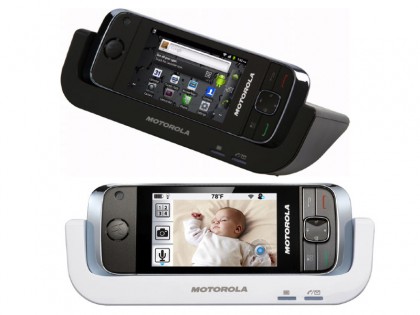
Motorola Android Powered Home Phone Visits the FCC

According to a recent FCC filing Motorola is prepared to bring an Android phone into your home via your land line. Yes, land lines are still being used apparently as Moto plans to offer up the HS1101 and MBP2000PU to users who desire a more smartphone-esque experience with their home phone.
The two devices that Moto have created appear to be the same except in color. They could potentially run Ice Cream Sandwich on their 3.2-inch 400 x 240 LCD display. Other features include a front facing camera with video chat abilities, stereo speakers, built in answering machine, Wi-Fi, microSD storage, micro USB and access to apps through SlideMe.
I am not too sure about this one, it looks damn ugly to me. And besides, I haven’t had a land line in like 4 years now that smartphones do exactly the same thing and more. Why add another monthly bill to your responsibilities when you already have those features in your pocket? What do you guys think? Does this appeal to you at all?

Samsung may announce the Galaxy S III in April


Over the weekend rumors started that Samsung would announce the Galaxy S III at the Unpacked event in London on May 22, but we have an interesting comment from Kim Young-ha, Chief Executive of Samsung Electronics China. He was speaking at the Samsung Forum 2012 in Beijing, China about marketing strategies. There is one quote in particular that Android fans will care about:
In order to increase sales of the Galaxy S III as well as the Galaxy Note which is already very popular in China, the company is considering rescheduling the rollout of the Galaxy S III from May to April.
I say if the phone is ready, go ahead an get this bad boy released, but I’m far from a marketing genius. Until then I guess we have to enjoy all the fake renders that keep popping up every few hours.

It’s Alive: Samsung Galaxy S III is now testing in Korea

My title was actually a little sarcastic because I’m not sure if this is really news, but AsiaE is reporting that the Samsung Galaxy S III has begun testing with carriers in Korea. Everyone knows when it comes to mobile phones, they test them for many months before they’re released. We already know a Galaxy S III is coming so this is far from a shocker. According to AsiaE, they are a little impatient as they want things to go a little faster. Unfortunately, the fact that it has a quad-core processor and LTE will only slow things down.
In the other non shocker, ddaily in Korea is reporting that they expect the Galaxy S III to come with a 4.65-inch 720p display, but it will also be the first 720p display that is Super AMOLED Plus. It will also have a ppi of 316ppi which rivals the iPhone 4 and 4S. Again this is news that has already been rumored that we reported on, but I guess it’s nice to see some more confirmation. All I really want is a true picture of this beast!!!

Android 5.0 Jelly Bean – Too much, too soon? Bad for users and developers alike?

Google has a problem. Android is being developed too fast while the adoption rates for the new versions are too low. The Android 2.x series started when Android 2.0 Eclair was released at the end of 2009. By the end of 2010, Froyo and Gingerbread (Android 2.2 and 2.3) were released and remained the dominant versions used until today. Since then, Google has released Android 3 (Honeycomb) and Android 4 (Ice Cream Sandwich). But, chances are that if you buy an Android phone today it will be running either 2.2 or 2.3.
The tablet market has slightly better adoption rates for the newer versions of Android, but this is mainly due to the fact that Android 3 was designed with tablets in mind. Even so, popular tablets like the Samsung Galaxy Tab still used Android 2.x, and its updated variant, the Galaxy Tab Plus, uses Android 3.2 and not Android 4.0.
Only 3% of Android devices run Ice Cream Sandwich and yet pundits are now talking about the release of Android 5, codenamed Jelly Bean. These are only rumors so far, and, at the recent Mobile World Congress 2012 event, Eric Schmidt said nothing about Android 5 during his keynote. However Android 5 will be released one day, if only because 5 comes after 4 and Android will continue to be developed.
But Google’s problem is it needs to find a way to convince device manufacturers to release Android updates and it needs to make this process easier for users. Apple seem to be winning in this respect, with a recent report finding that 77% of customers upgraded to iOS 5.1 within 14 days of its release. 3% adoption of ICS, 77% of iOS 5.1. The difference is huge.


Android flavor distribution in March

Implications

The implications of the slow adoption rates are threefold:
First, users aren’t getting the best that Google has to offer. Android 4.0 is superior to Android 2.x in many ways (see Android 2.3 Gingerbread vs. Android 4.0 Ice Cream Sandwich), and yet, these benefits aren’t being passed to the user. Assuming that Android 5.0 will be better than Android 4 and that it will add neat new features, how long will it be until customers get these new features?
The iPhone 3GS was released in 2009 and it can run the latest version of iOS. I think you will be hard
pushed to find an Android device from 2009 that has support for ICS, let alone Jelly Bean (although this may change when CyanogenMod 9 comes out). LG has made a commitment to bring Android 5.0 to all of its 2012 handsets (with the sole condition that the phone can support Android 5.0), but there is no such commitment for the Android phone you bought last year.
Second, there is the question of security. Security vulnerabilities are discovered almost daily in all computer operating systems and applications – from Windows XP to Mac OS X 10.7, from Flash to Chrome. Companies like Google spend a lot of money and energy in fixing these vulnerabilities and making their products secure. However, if these changes and improvements aren’t passed on to the customer, then their efforts are in vain. For example, Android 4.0 introduced full device encryption allowing you to encrypt all the data on your phone including all the application data, music, downloaded information, and so on. Only 3% of Android users have this facility at their disposal today.
Thirdly, developers are left trying to support older versions of Android and have to ignore new features as they try to ensure that their apps and games will run on the majority of devices. For example, Android 4 added a new social API which allows app developers to use a new unified store for contacts, profile data, stream items, and photos. With the new API, any app or social network (with permission from the user) can contribute contacts and make them accessible to other apps and networks. Great for social networking fanatics. But if the devices out there in the real world are still running Android 2.x this API is irrelevant. Developers have to ignore it.

Motorola, Chrome, and Android 5.0 Starter Edition

This could all change once Google finally gets its hands on Motorola. If Google does the right thing and offers free upgrades to all the devices it releases, and uses Motorola to showcase the power of Android, it should shame the other manufacturers into releasing upgrades for their hardware. This way the users win, developers win, Android wins.
Google could already be doing this by releasing the Chrome beta exclusively for Android 4.0. This means that only a small number of users will be able to use the new browser (compared to the total number of Android users), and yet Google is insisting on ICS. Is this for technical reasons? Maybe. But Firefox is available for all devices running Android 2.1 or above (as long as they have 512MB of RAM).
Is Ice Cream Sandwich the Windows Vista of the Android world? When the netbook  phenomenon struck, Microsoft was forced to extend the life of Windows XP as it was the only Windows that was able to chug along happily on these lower specification laptops. Windows Vista was way to heavy.
Is this true of ICS? Android 4.0 does indeed impose some minimum requirements in terms of memory and GPU capabilities. For example, all devices running Android 4.0 are required to support hardware-accelerated 2D drawing.  Should Google be looking at a lighter version of Android 5 that can run on today’s devices with, say, only 256MB of memory and with a lesser GPU?

What do you think?

Do you agree with me? Or do you think I got it wrong? How do you think Google could improve adoption rates? Let me know by adding a comment below. I promise to reply to all sensible comments!

Tuesday, April 3, 2012

Video Walkthrough: Create your own Samsung Galaxy S3

The Samsung Galaxy S3 has done a very good job of staying hidden, with not even a whisper of what its specifications, design, or release date will be. This has resulted in an endless swirl of rumors and speculations, with “leaked” specifications and “press release” renders of the smartphone, every other week. While a lot of the rumors on the specifications might be as close to the truth as possible, people have often been way off-base with the design renders being released. Most have been very easy to identify as fake, even if their creators invested a considerable amount of time and effort into making them.
Well, if you’ve ever wondered about how easy or difficult creating such a render would be, we have the answer for you. Wayne Drescher Jr, of WJD Designs, decided to show exactly how easy it is to create a fake render with enough time and some Photoshop know-how. He did this with minimal effort, simply by mixing and matching elements to create what could potentially be released as the “real” thing. Definitely not the most credible render we’ve seen so far, but a good guideline nevertheless.
You can watch the video here, courtesy of WJD Designs.

What are your thoughts? Are you going to attempt to create a render of the Galaxy S3 (replace with your favorite device) as well? Send us your designs if you are.